Raymond Schmidt
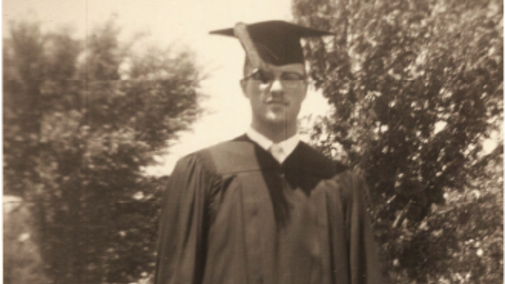
Raymond Schmidt (UN, BS, 1958) devoted 48 years serving the U.S. Navy in diverse assignments on active duty and as a Civil Service employee and contractor, and continued his academic education at Navy schools and three other universities. Those experiences confirmed the vital part libraries and archives play in advancing knowledge at universities and for personal research projects. He learned how they also preserve corporate memories of government and private organizations, as well as help connect scholars across disciplines.
During a visit to Love Library in May 2019, Mr. Schmidt took his first full tour of the facility since graduation. He gained firsthand appreciation of the significant expansion and transformation of spaces in this attractive structure that lies at the heart and center of campus. The tour exposed him to the wide scope of support needed to help keep the Libraries abreast of evolving challenges in research and teaching faced by institutions of higher education.
Pending selection of a major long-term purpose for the fund, the Schmidt family encouraged Dean Claire Stewart to apply the fund immediately for urgent needs to ensure that it added value to the Libraries. This opportunity inspired Library Outreach Archivist Traci Robison to offer a chance for on-campus students to engage with primary and secondary sources held by the Library Archives and Special Collections to create a research project or an online display made available for public viewing.
The Library internship is a logical step for students already familiar with short essays and longer term-papers. A significant aspect of the finished product is that it is ready for presentation to a general audience. This internship prepares students to investigate careers in museums or archives, as well as in libraries—or another discipline or application of public history. Mr. Schmidt noted that this fund has “provided a modest amount of seed money to challenge qualified interns academically, while also demonstrating how unique Library archives and other original sources can be put to good use.”
-
1964
Returning to inactive duty in 1964, he earned a Masters in Modern European Diplomatic History at the University of Wisconsin in Madison.
-
1968
The Navy offered him a Civil Service position in Washington, DC as the Naval Cryptologic Historian in 1968, where he also served as archivist, records manager, and manager of a unique depository of artifacts and records dating back to the 19th century.
-
1969
Raymond P. Schmidt conducted research and taught courses in highly technical subjects for three years after entering active duty in 1969. He simultaneously completed part-time all but his thesis for a Masters in International Relations at the University of Maryland. The Navy transferred him overnight to Key West, Florida the morning after President Kennedy’s speech on the Cuban Missile Crisis. He served successively as communications officer and senior operations watch officer for a new command on board the Naval Station.
-
1981
Before leaving in 1981, he organized, curated, and directed the first naval cryptologic museum and established and headed the declassification program for items stored in the depository. During this time he completed all but a dissertation for a PhD in Law and Policy Studies in the School of Government and Politics at The American University.
-
1982
In 1982, following 16 months with the Office of Naval Intelligence reviewing all official documents provided to Congress, he was recalled to active duty as the Reserve Forces Advisor to the three-star director of a joint Defense agency.
-
1988 - 2000s
Returning to Civil Service status in 1988, he headed the Department of the Navy records declassification program until retirement in 2000. Over the next three years, he reviewed Navy records held by the National Archives for declassification and release under the Nazi War Crimes Disclosure Act. Over those five decades, he attended the Naval War College, the Industrial College of Armed Forces, the National War College, and various other Department of Defense schools.
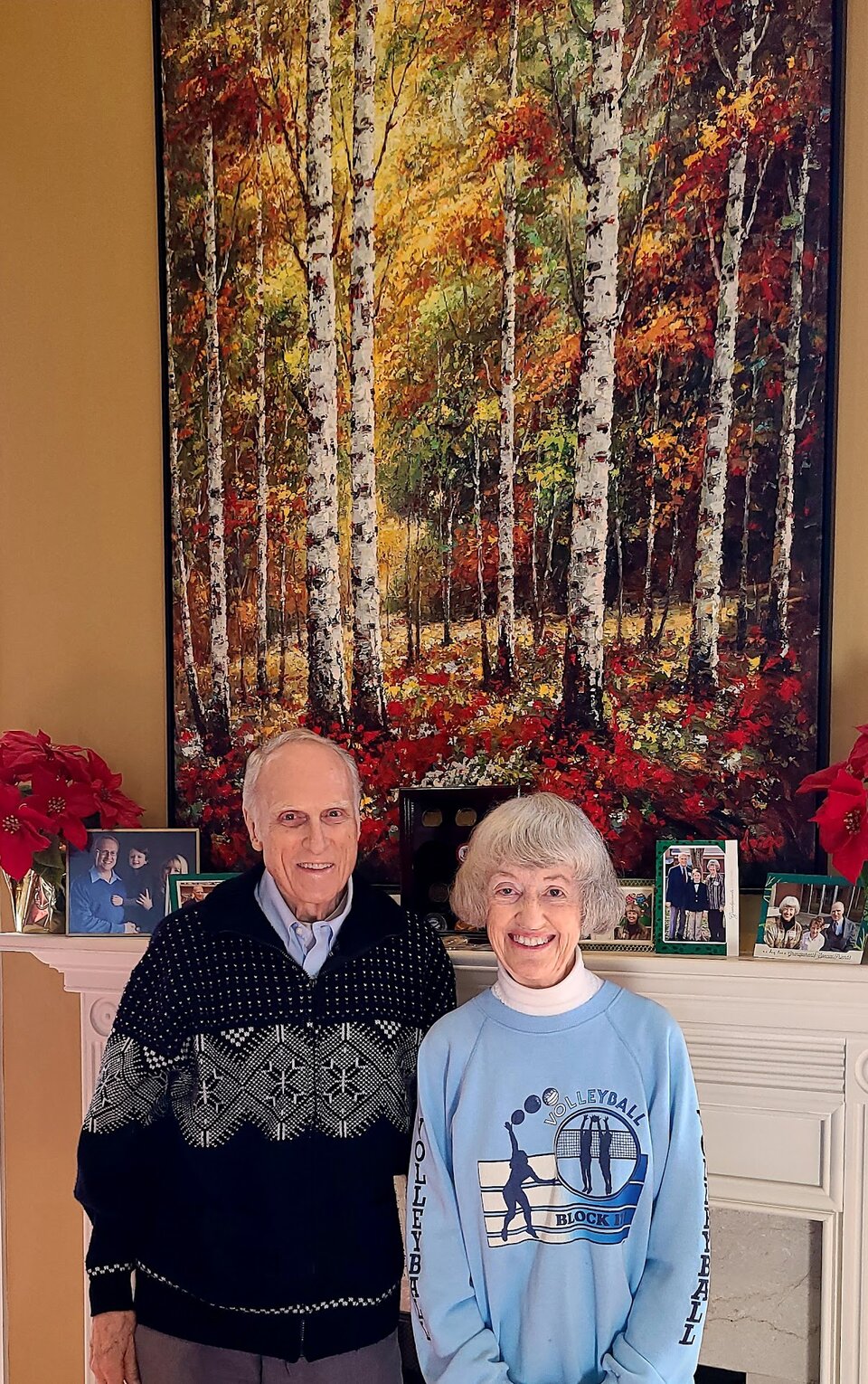
An Interview with Raymond Schmidt
What do you see as the benefits of the internship?
My observation is that the internship directly and immediately helps the Archives by expanding awareness of its collections and shows how they can be used to serve researchers on campus. I sense—and hope—that it results in positive learning outcomes for both the students and Archives faculty/staff mentors. Students may add depth to their research skills and their ability to curate virtual exhibits. One goal is to help train widely-experienced professional librarians and archivists who are essential to society. Ultimately, supervising and mentoring interns by faculty and staff should bring lasting gains for both partners in the venture. Such initiatives that show Libraries enhancing their range and depth of service to researchers can serve as stepping stones to larger programs that strengthen ties with University students and faculty, as well as with cooperating libraries and scholars, and even Nebraska taxpayers and citizens.
What advantages can students gain by using Archives in their research?
Original sources help investigators get to the heart of an issue, if not to the truth of an inquiry. Consider how early in the history of Western Civilization libraries and archives were formed to retain memories of the past. The 7th century BC Assyrian Library and the Sumerian Archives of the 4th millennium BC held collections of irreplaceable records of the ancient world. Librarians and archivists especially can appreciate the Muslim scholars of the 7th and 8th centuries AD who rescued Greek and Roman manuscripts from destruction. Maimonides, one of a number of Jewish scholars, also used these writings in his studies, keeping ideas alive for future generations. Libraries and archives obviously existed in other regions on other continents.
I value the organized collections of information (documents and artifacts) in Archives (and other repositories) based on what I learned over six decades of official and personal research. My first historiography professor in the Washington, DC area devoted several class sessions to tours and briefings at the Library of Congress and the National Archives. Students gained specific relevant knowledge and skills and met with officials who explained regulations and procedures to locate potential sources of interest to each of us. Using original materials often gives insight into the context of the topics addressed by an author. My visit to President Woodrow Wilson’s home in DC helped me visualize how he and Mrs. Wilson worked together on cables to “Colonel” Edward M. House in Europe who was attempting to mediate peace among belligerents prior to the U.S. entry into World War I.
The more a researcher understands about the context of events, the stronger the relationship with and understanding of the subject of inquiry. On occasion I re-interpreted facts, events, and my opinions formed from secondary sources. This happened when I read the invitation by Nebraska Governor Robert Cochran to President Franklin D. Roosevelt to dedicate the new Lincoln Capitol building in the fall of 1936. It was purely a political visit. Such first-hand exposure to original sources can help researchers gain confidence in understanding an issue. At a minimum, such deeper inquiry should get the student beyond superficial generalizations and biased interpretations of events. It may even result in detecting misinformation and exposing hoaxes.
How did you select history as your life’s work and develop a passion for studying it?
Like many other teenagers, several adults directly influenced me: The minister-father of a good friend and my high school English, history, and math teachers and coach sparked an interest in learning about the past. Tales of previous generations of my family added to my curiosity in finding out the truth about those ancestors. University professors in U.S. social and economic history and Constitutional Law, plus a well-known scholar on Medieval Europe, made it clear that studying the past can help enlighten understanding of our current relationships. Just natural curiosity prompted me to explore more aspects of world history, which I continue into retirement. Over time, I found parallels between historical research and investigations by detectives and practitioners of the legal profession. Who does not enjoy tracking down new evidence about familiar places, events, and people?
Talk about your days as a student at the University and any memories of Love Library.
For almost all four of my undergraduate years in Lincoln, I lived one block south of Love Library in “Que Ball Hall” (a private boarding house) at 13th and Que Streets. After I downed juice and a roll for breakfast at a small diner next door, I took a few more steps north and Love welcomed me on campus. A number of friends and classmates routinely studied in the library and sometimes we gathered in a room to socialize and enjoy discussing major news stories of the day—such as whether UFOs really existed. Love Library and the then-nearby law library became quiet places for serious reading and served as a welcome refuge from the sometimes beastly Lincoln weather during the mid-1950s.
What led you and your family to focus your gift on this aspect of campus needs?
When I graduated, my purpose was to pay back the investment that taxpayers and caring personal donors made in my education, from a Regents Scholarship to other aid from individual Nebraskans. Initially, I requested that my dollars help support students who worked to afford attending the University. As years passed, my ability to increase that support grew, along with a desire to focus the benefits on a broader purpose and to more students. My Navy training in the mid-1950s emphasized that transistors were replacing vacuum tubes in our equipment, although we could not appreciate the changes this meant for the years ahead. With the wider application of information technology in business, government, and research, I inquired whether the advantages of the cyber revolution could be transferred wisely and effectively to more disciplines, especially in the humanities.
I believe that support for University Libraries can help not only individual students and researchers, but also perhaps cooperating institutions, taxpayers, and alumni/-ae. Every discipline welcomes financial aid and recognition of the vital role it serves. The University Libraries interacts with virtually all of them in supporting teaching, research, and public service. I was pleased to note that Love also provides space for education and testing. Thus, our investment might help Nebraska Libraries respond to a wide spectrum of needs and interests.
Donors can make large or small investments in the functions of acquisition and operations, as well as planning and upgrading facilities. Funds may also go toward cooperating with institutions that share resources with the Nebraska University Libraries. Archivists and librarians engage every day in finding, evaluating, and supplying information to patrons, so enhancing their professional growth is essential to remaining relevant to needs of students and faculty.
How to Support Libraries
Support the University of Nebraska–Lincoln Libraries by helping advance innovative spaces, services, collections, and technology that enrich learning and research, and show your Libraries pride with exclusive merchandise including hoodies, tees, totes, and more.