Portrait & Legacy
Kay D. Guiles
Kay Dean Guiles (1931-2020) a very special Husker and long-time friend of the University Libraries, died in his Washington D.C. home on August 30, 2020. Kay Guiles’ legacy, both personally with family, friends, and colleagues, and professionally, remains vibrant.

Guiles was born in North Platte, Nebraska, the youngest of three sons, to Arthur and Tina Guiles. According to Guiles’ nephew, Ron Guiles, his mother worked at the North Platte Library, the home was full of books, and academically focused. As an adult, Guiles would visit his family in California for two weeks every year, travel with friends and colleagues, and was an avid tennis player.
"Kay remained close with our family in California, family in Nebraska, and his family of friends in Washington, D.C.,” explained Ron Guiles.
Guiles graduated from North Platte High School and received his Bachelor of Science in Education and Human Sciences from the University of Nebraska–Lincoln in 1953 and his Master of Arts degree in Political Science and History in 1955. His dissertation, “Algeria before World War II,” is in the UNL Libraries Depository Retrieval Facility.
After being drafted into the Army for two-years of service, Guiles attended the University of Michigan, courtesy of the GI Bill, where he received a Master of Library Science in 1957. From there he interned at the Library of Congress in 1958 and never left. Guiles became their longest serving employee – 62 years at the time of his death.
Guiles began his long professional tenure as a Descriptive Cataloger in the Romance Section of the Descriptive Cataloging Division. But it was an assignment in 1965 that would present him with one of the greatest legacies of his career. He, and Ruth Freitag of the Reference Department, were both sent to orient Henriette Avram, of the Information Systems Office. As Guiles explained it in an interview in 1989, “we simply sat down and went through the cataloging rules and through a catalog card, trying to describe the nature of the data, why they were there, what function they served.” Freitag showed Avram how the data was used from the perspective of reference librarians. (Kay Guiles Interview #1, James Edward (Jef) Fall, Washington D.C., May 2, 1989.)
The result of their combined effort (about a 6-month process) led to one of the first reports issued by the Library of Congress, “Proposed Format for a Standardized Machine-Readable Catalog Record,” which was the beginning of the development of machine-readable cataloging (MARC). Soon after Guiles was involved in the MARC Pilot Project.
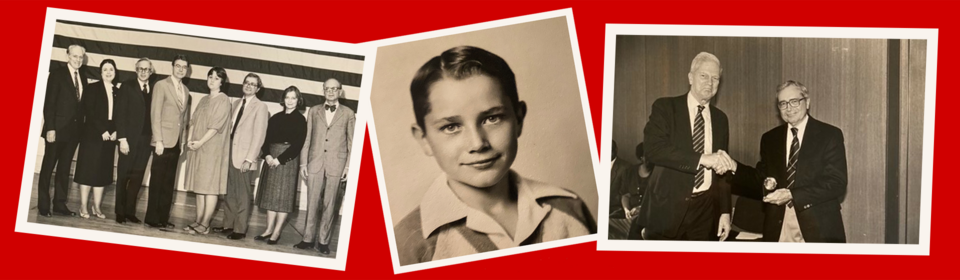
The pioneering work of Avram, Guiles, and Freitag, paved the way for developments in displaying library cataloging in electronic (and now online) formats giving rise to online catalogs in almost all libraries today.
“We consider Henriette Avram the ‘Mother of MARC’, and sometimes I’ve heard Kay called the “Father of MARC,’ but that is not correct,” explained Thompson Yee, a long-time friend and colleague at the Library of Congress.
“The three, Avram, Guiles and Freitag, worked together and Kay, having no computer background, shared his knowledge with people who had the computer skills. He helped them understand cataloging data and MARC has lasted since the 1960s,” said Yee.
After that major contribution, Guiles was instrumental in developing TOSCA – total online searching for cataloging activities. According to Yee, this led to the decision to close the Library of Congress name authority and bibliographic card catalogs. Guiles focus after MARC was specific to the cataloging work of the Library of Congress. He became the primary procedural documenter in the cataloging policy office.
“Kay was devoted to the Library of Congress and became the Library’s institutional memory. Staff would go to him with questions about obsolete practices and invariably he would have a file or an answer for them,” said Yee.

Guiles was also a proud supporter of the University of Nebraska–Lincoln and his support of libraries coalesced in 2008 when Guiles established the Kay Guiles Fund for Excellence at the UNL Libraries. The fund is used to benefit the University Libraries at the direction of the Dean of Libraries. The fund was endowed upon his passing. Various projects have benefited from Guiles support including the refurbishment of study carrells in Love Library in 2015.
Guiles, devoted to family, friends, colleagues and libraries, will be missed but his legacy lives on in the University Libraries and the library profession.
How to Support Libraries
Support the University of Nebraska–Lincoln Libraries by helping advance innovative spaces, services, collections, and technology that enrich learning and research, and show your Libraries pride with exclusive merchandise including hoodies, tees, totes, and more.